
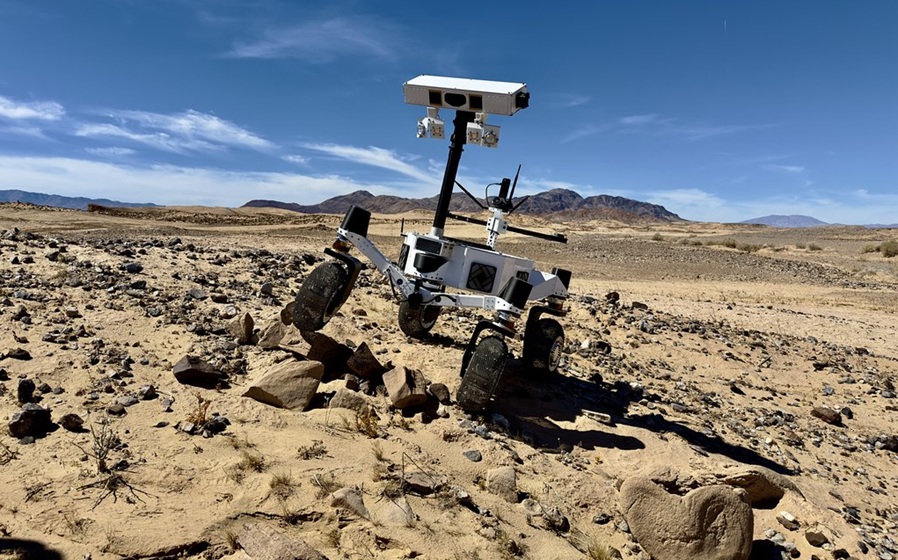
A new rover prototype is teaching NASA scientists how to design robots that can think for themselves and navigate terrain that would leave old rovers
A new rover prototype is teaching NASA scientists how to design robots that can think for themselves and navigate terrain that would leave old rovers stuck in the lunar or Martian dust, reported Space.com.
The Exploration Rover for Navigating Extreme Sloped Terrain (ERNEST), developed at NASA’s Jet Propulsion Laboratory, recently completed a 16-mile (26 kilometers) trek through the desert in Southern California. The journey took more than 37 hours of driving time over the course of seven days, and ERNEST completed it almost entirely autonomously, “with minimal intervention” from engineers monitoring the test, according to a JPL statement.

NASA hopes the technology can be incorporated into future rovers to the moon and Mars, which could one day travel farther and faster than their predecessors, relying on onboard programing to assess and navigate treacherous landscapes previously unreachable by robotic explorers, reported Space.com.
“This testing is helping us refine the mobility hardware and autonomy software to navigate extreme distances across a wide range of terrain and lighting conditions anticipated on the moon,” Issa Nesnas, a JPL principal technologist, said in the June 18 statement.
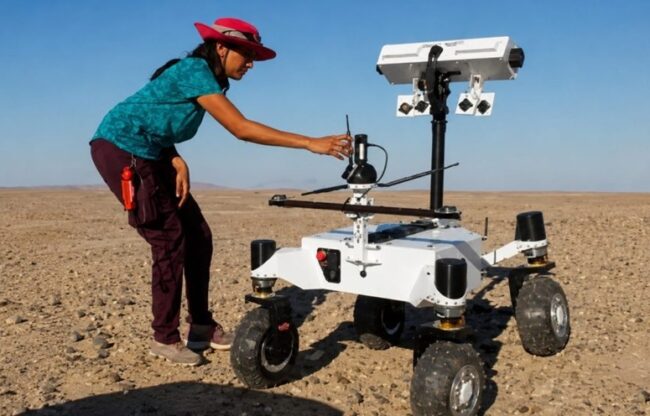
Development of ERNEST started in 2022 using JPL internal research and development funding and has since been brought under the umbrella of the NASA Science Mission Directorate’s Exploration Science Strategy and Integration Office, as well the agency’s Mars Exploration Program, reported Space.com.
Part of what sets ERNEST apart from its predecessors are its novel wheels and active suspension system. Paired with adaptive artificial intelligence, the rover is able to identify obstacles in its path to either avoid or overcome as it travels toward its next destination.
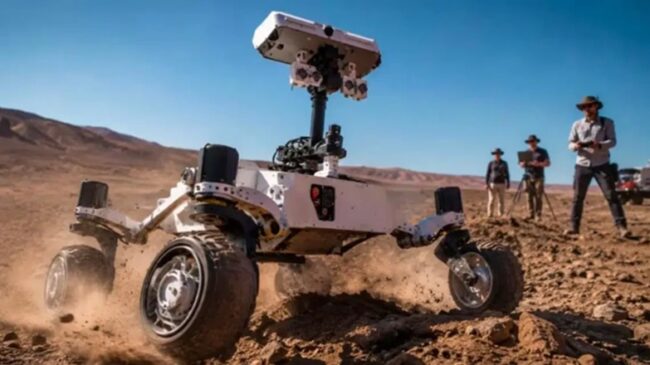
ERNEST’s intelligence is the result of months of reinforcement learning conducted in a virtual environment, where the rover accumulated thousands of hours of experiential data within the span of just a few days by running multiple simulations simultaneously. Then, to test out its learned knowledge after virtual testing, the team put the test rover through an obstacle course at JPL’s Mars Yard before graduating it to the California desert sands, reported Space.com.
Past rovers, like Perseverance and Opportunity on Mars, have been designed with a “rocker-bogie” system, which uses open pivot points to passively distribute weight evenly across their six wheels. The four-wheeled ERNEST prototype uses two joints on its front chassis that gimbal to alter the rover’s gait, creating motions that mimic “squirming, wheel-walking, and obstacle-climbing,” according to the same statement. ERNEST is also able to steer each of its wheels, allowing the rover to maneuver from side to side, in addition to forward and backward.
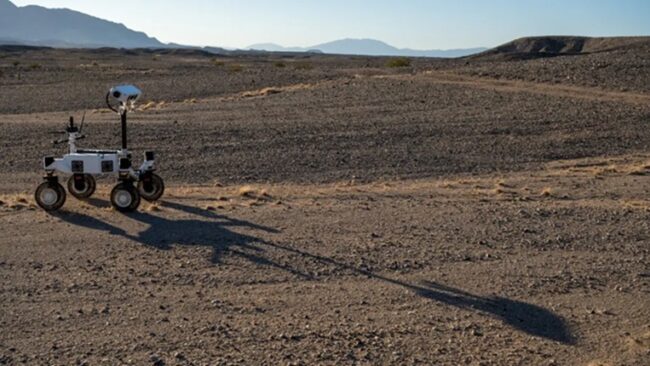
“While the rocker-bogie system has been very successful over the past 30 years, there’s been a lot of research in that time on mobility and understanding terrain interaction,” said Hari Nayar, lead principal technologist for the ERNEST team, reported Space.com.
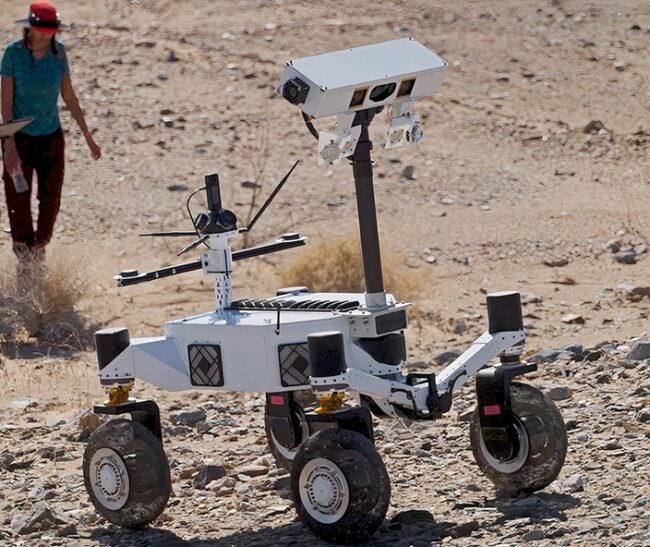
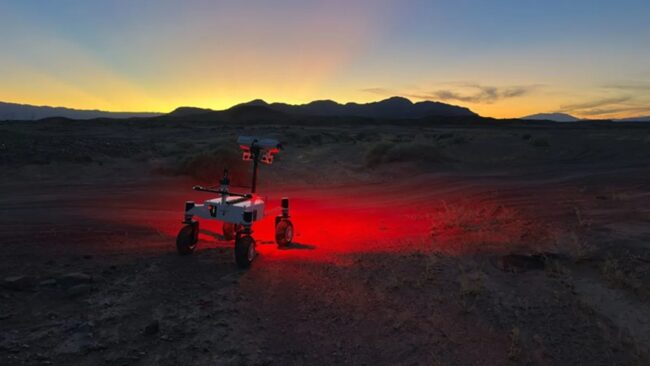
During its week-long test this past March, engineering teams monitored ERNEST across several navigational scenarios, including traveling at night and other poor lighting conditions to simulate certain lunar environments. The rover measures 4 feet (1.2 meters) long and drove at speeds up to 0.6 mph (1 kph), much faster than rovers currently operating on the moon and Mars, like Perseverance, which, after five years on the Red Planet, has only recently crossed the distance it takes to run a marathon on Earth (26.2 miles, or 42.2 km).
Engineers hope ERNEST will be used as a model for even larger, more capable rovers designed to go much farther, and at higher speeds, as reported by Space.com.
All Credit To: Space.com


COMMENTS