

UVEG brought together specialists in Law, Pedagogy and Human Behavior Sciences to analyze the new skills demanded by the work world Guanajuato/Gto
UVEG brought together specialists in Law, Pedagogy and Human Behavior Sciences to analyze the new skills demanded by the work world
Guanajuato/Gto News
Artificial intelligence is already modifying the tools, processes, and scenarios in which different professions are practiced, which poses a fundamental question for universities:
What do students need to learn today to perform in a work environment that is changing at a faster pace?

This reflection was one of the central themes of the 3rd Humanities Colloquium: “Professional Challenges in a Transforming World,” organized by the Virtual University of the State of Guanajuato (UVEG), where specialists in Law, Pedagogy, and Human Behavior Sciences analyzed the evolution of their professional fields, the skills currently demanded by the labor market, and the challenges posed by the incorporation of artificial intelligence.

“Universities cannot train students for yesterday’s job market. We must constantly review what our graduates know how to do, what new tools they need, and, above all, what human capabilities will continue to be essential in an environment where technology is advancing rapidly,” said Ricardo Narvaez Martinez, rector of UVEG.
The meeting allowed for discussions on topics such as:
- Updating curricula
- Incorporating digital and artificial intelligence skills
- Critical thinking
- The ability to apply professional knowledge in scenarios that are increasingly mediated by technology
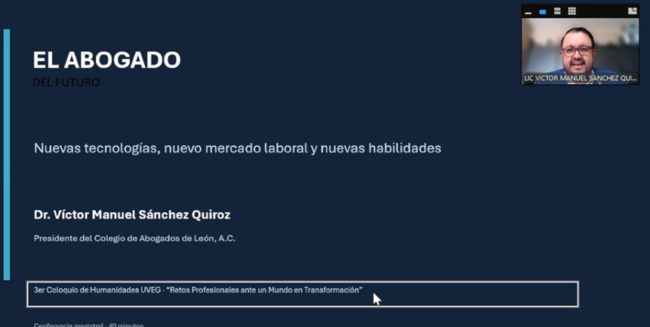
The Law experts addressed the profession from the school, organizational, and socio-community perspectives.
The panel on Human Behavioral Sciences brought together experts who shared perspectives related to human flourishing, talent management, and the school setting.
Another key theme was the role of online education in the face of these changes. The academic discussion suggested that having technology or a platform does not, in itself, guarantee an education experience: behind every digital resource there must be a pedagogical intention, support, and communication capable of maintaining the connection with the student.
One of the points addressed during the colloquium was that geographical distance may be a condition of the virtual modality, but it should not necessarily become a pedagogical or human distance.

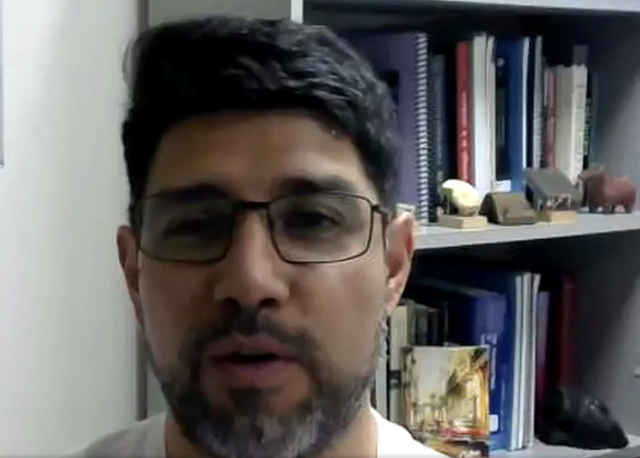
This vision is part of the UVEG model, which seeks to expand coverage and promote education equity through an alternative training option that allows people to study from wherever they are and combine their professional training with work and other responsibilities.
“Being leaders in virtual education means understanding that people need alternatives that adapt to their reality and, at the same time, allow them to remain professionally relevant,” said Rector Ricardo Narvaez Martinez.

UVEG presented keynote lectures that enriched the discussion on current challenges in education, professional practice, and human development.
En Español:


COMMENTS