
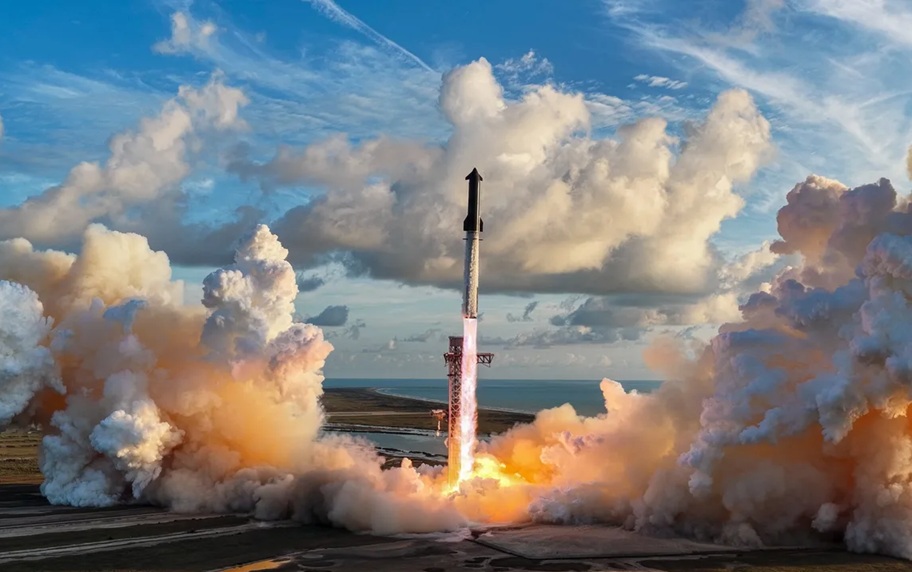
Starship just went where it had never gone before. SpaceX's Starship and Super Heavy megarocket, the biggest and most powerful launch vehicle ever
Starship just went where it had never gone before.
SpaceX’s Starship and Super Heavy megarocket, the biggest and most powerful launch vehicle ever built, reached orbit on September 28, notching a huge milestone on the road to operational flight. But the launch, from SpaceX’s Starbase site in South Texas, was not without high drama.

During liftoff, one of the six engines on Starship’s Ship upper stage went out, raising doubt about whether SpaceX would attempt to reach orbit after all. SpaceX spokesperson Dan Huot even announced it was called off, only to reverse course as flight controllers decided to press ahead, reported Space.com.
“We are not giving up yet,” Huot said. “We will continue to hang out.”
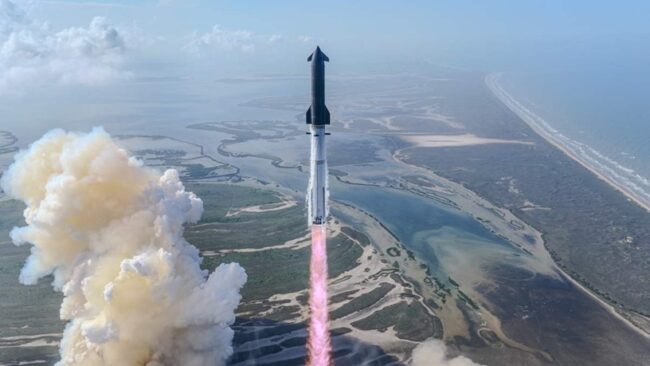
And the call came just a few minutes later: Starship was “go” for orbit. About 25 minutes after liftoff, Ship fired a single Raptor engine briefly to enter orbit. It was the primary goal of SpaceX’s Starship Flight 14 launch test: Reach orbit for the first time and deploy 26 Starlink satellites into an operational orbit, reported Space.com.
“Starship is orbital,” mission control confirmed, eliciting cheers from the SpaceX employees watching the launch live at Starbase.
“First orbital flight of Starship successful!” SpaceX CEO Elon Musk said on SpaceX’s X platform.
Starship stands 407 feet (124 meters) tall and can haul more than 110 tons (100 metric tons) to Earth orbit, according to its SpaceX specs page. The rocket’s Super Heavy booster and Ship upper stage are both designed to be fully and rapidly reusable.
SpaceX thinks this combination of power and reflight will be transformative, allowing humanity to expand its footprint into the final frontier like never before. For example, Elon Musk has repeatedly cited Starship’s potential to make Mars settlement economically feasible, reported Space.com.
NASA is invested in this vision as well. The space agency picked Starship to be the first crewed lander for its Artemis program, which aims to build a base near the moon’s south pole over the next five years or so.
If all goes according to plan, Starship’s Ship upper stage will fly on the crewed Artemis III mission to low Earth orbit in mid-2027 and put astronauts down near the moon’s south pole a year later with Artemis IV. (According to SpaceX’s plan, anyway; NASA also selected Blue Origin to supply Artemis crewed landers, and it’s unclear at the moment which vehicle will fly Artemis IV,) , reported Space.com.
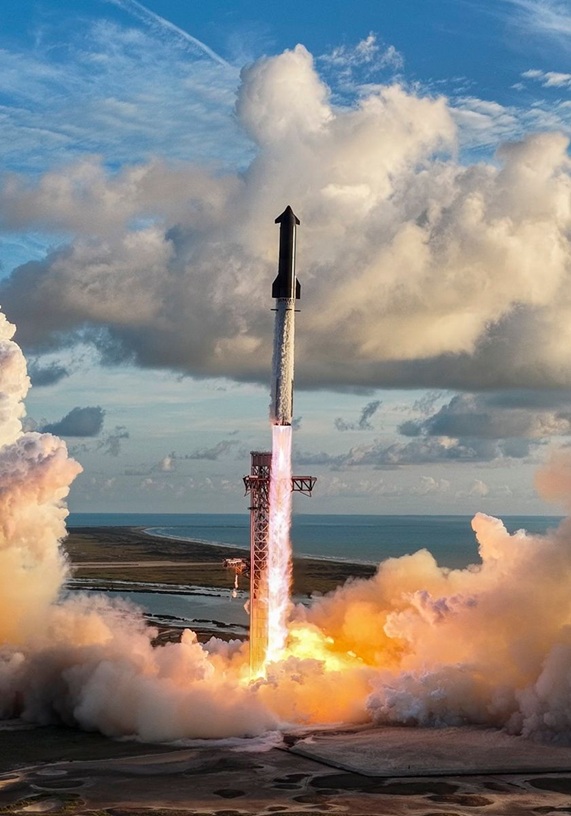
Starship lifted off from SpaceX’s Starbase site in South Texas at 8:48 a.m. EDT (1248 GMT; 7:48 a.m. local Texas time), kicking off its 14th test flight to date.
Flight 14 is the third Starship launch to feature Version 3 of the vehicle, a relatively mature iteration that’s capable of deploying satellites and reaching the moon and Mars, among other tasks.
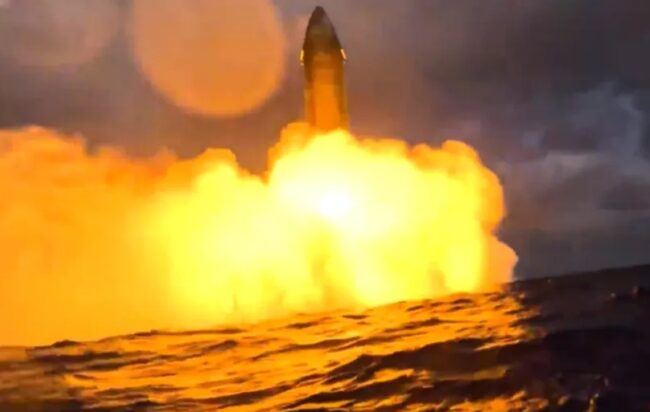
Everything went according to plan initially. Super Heavy did what it was supposed to do, coming back down to Earth for a controlled splashdown in the Gulf of Mexico about seven minutes after liftoff. It appeared to experience several engine shutdowns during flight, but nothing serious enough to affect the landing. Meanwhile, Ship continued on its upward ascent, inserting into low Earth orbit (LEO) about a half-hour into the flight, reported Space.com.
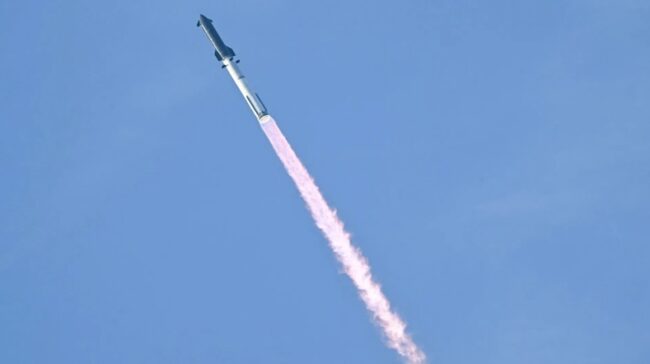
But SpaceX wasn’t content with just getting to LEO. Ship carried 26 of the company’s next-gen Starlink V3 broadband satellites, which it successfully deployed over a 30-minute stretch starting at about T+34 minutes. These are the first members of a megaconstellation that will eventually consist of about 100,000 satellites, according to Musk. (Ship deployed V3 Starlinks on Flight 13 in July, but they were on a suborbital trajectory and soon fell back to Earth.)
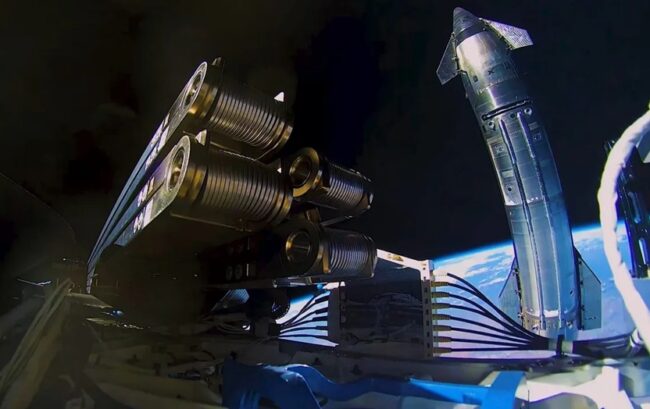
Three of the 26 Starlinks were outfitted with cameras, which they used to scan Ship. SpaceX engineers will study this imagery to see if they can improve Ship’s heat shield, which allows the vehicle to survive the fiery trip down through Earth’s atmosphere at the end of its missions, reported Space.com.
Ship kept circling Earth for a while after deploying the Starlink satellites, though not nearly as long as originally planned. SpaceX wanted Ship to complete about six orbits and splash down off the coast of Chile 9 hours and 50 minutes after launch, but mission controllers decided to shave nearly seven hours off that flight time.
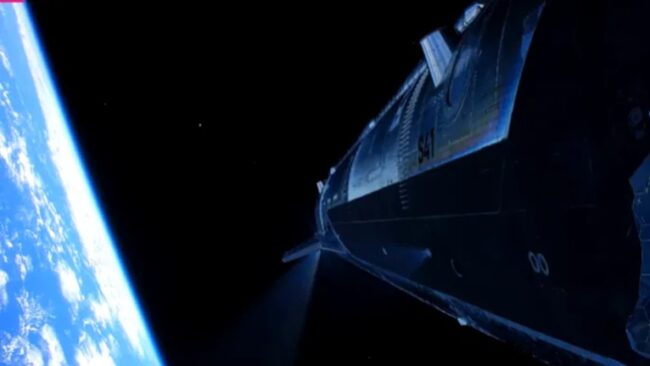
Ship started reentering our planet’s atmosphere about two hours and 40 minutes after launch and went subsonic, breaking the sound barrier, in the fast-to-slow direction, 26 minutes later. The vehicle splashed down intact in the northern Pacific Ocean three hours and eight minutes after liftoff, causing another eruption of cheers from the folks gathered at Starbase, reported Space.com.
Ship then toppled over and exploded when it hit the waves, providing a dramatic capper to a very exciting day for SpaceX.
Despite all of today’s successes, SpaceX still has some work to do to get Starship fully up and running.
For example, the company plans to bring Super Heavy and Ship down on the launch pad at the end of each mission, catching both vehicles with the launch tower’s “chopstick” arms, a recovery strategy meant to make reuse quicker and more efficient. SpaceX has pulled off tower catches of Super Heavy on three test flights to date but has yet to try one with Ship, reported Space.com.
And Starship missions that go to the moon or Mars will require multiple launches of “tanker” spacecraft to fuel up Ship in Earth orbit. SpaceX has not yet demonstrated off-Earth refueling, so that will be another big box to check.
SpaceX will also need to install life-support systems ahead of crewed missions like Artemis IV, and it will doubtless fly Starship successfully many times before putting an astronaut on it. So stay tuned: There will probably be a lot more Starship action in the coming weeks and months, as reported by Space.com.
Credit To: Space.com


COMMENTS