
The festivities surrounding Holy Week and Easter in Guanajuato have become a benchmark and a reason for tourism and services, that promote developmen
The festivities surrounding Holy Week and Easter in Guanajuato have become a benchmark and a reason for tourism and services, that promote development and growth
Religious tourism opens new paths in Guanajuato with new routes and tourist stops, celebrations and activities related to the faith of the Guanajuatenses
Guanajuato/Gto News
Holy Week in Guanajuato is not only a symbol of faith; the different tourist routes, stops, and activities of Holy Week and Easter in Guanajuato represent the arrival of thousands of visitors to the State, where the identity of the people of Guanajuato, represented in different ways in each tourist region, are a reason for visiting and interest.

The Guanajuato State Tourism and Identity Secretary announces the calendar of activities, celebrations and attractions for Holy Week and Easter 2026, a period that reaffirms the State as one of the most representative destinations for religious tourism in Mexico, where spirituality, culture and tradition intertwine in every corner.
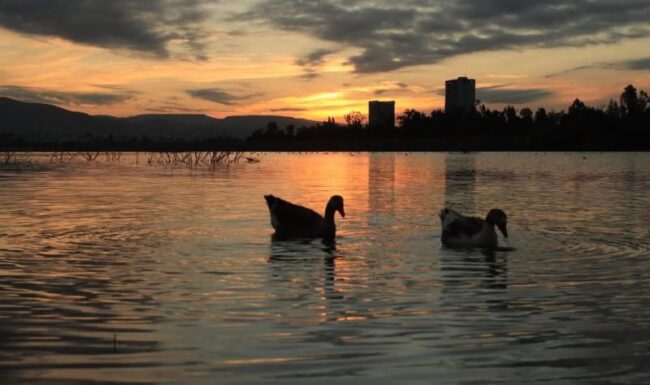
In Guanajuato, religious celebrations are an essential part of community life. Holy Week, considered one of the most important times of the liturgical calendar, reflects the deep Catholic tradition and cultural syncretism that characterizes its municipalities.
Processions, altars, pilgrimages, and religious reenactments coexist with cultural expressions such as music, gastronomy, and traditional dances, creating authentic experiences for both visitors and locals.
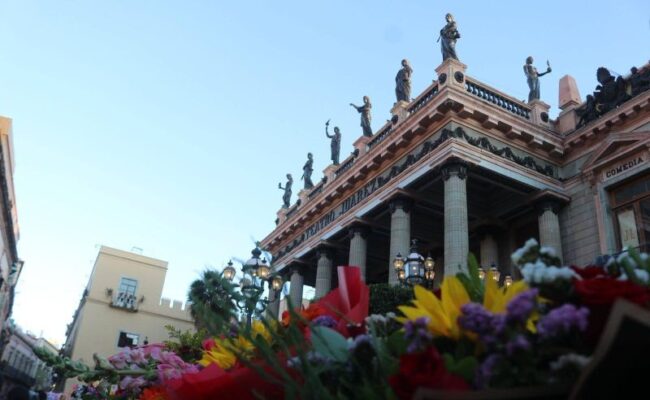
One of the most emblematic moments is Friday of Sorrows in the city of Guanajuato, a tradition dating back to 1885 that fills houses, churches, and old mines with color and symbolism, adorning them with altars dedicated to Our Lady of Sorrows. This celebration, preceded by the traditional Day of the Flowers, invites visitors to explore the city while sharing traditional drinks, strengthening the sense of community.
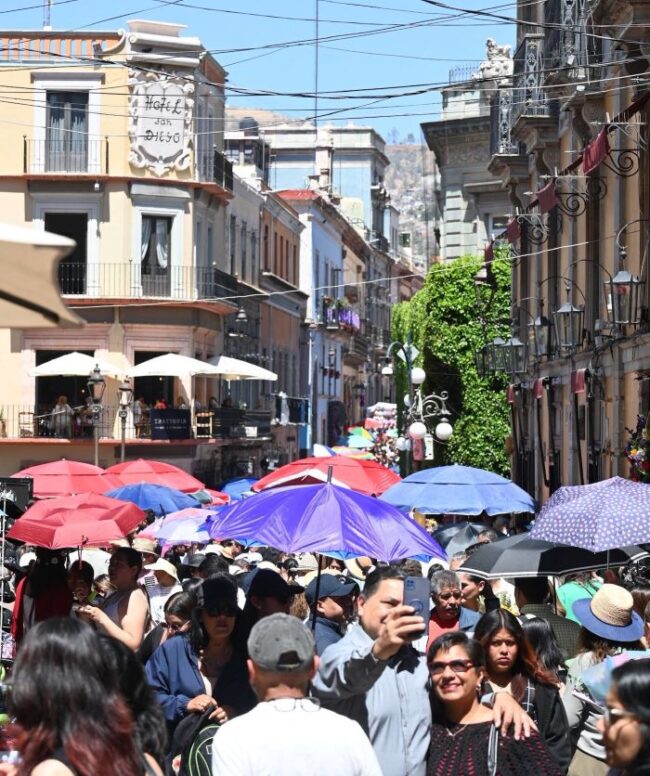
During Holy Week, the State Capital becomes a stage for profound expressions of faith. Since Holy Wednesday, with processions in historic churches, to Good Friday, with the reenactment of the Stations of the Cross, the veneration of the Holy Cross, and the solemn Procession of Silence, Guanajuato offers an experience that connects with spirituality and history.
In other municipalities, traditions come alive with great force. In San Miguel de Allende, the “Bringing of the Lord of the Column,” with more than 200 years of history, brings together thousands of faithful in a pilgrimage that covers between 12 and 14 kilometers from the Sanctuary of Atotonilco, accompanied by handcrafted carpets that embellish the route.
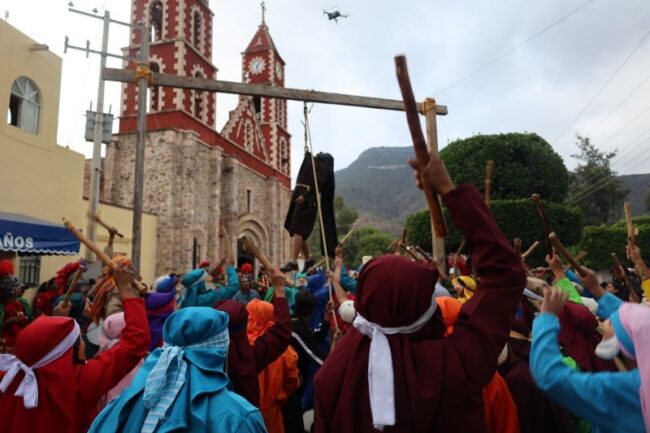
In Purisima del Rincon, La Judea remains as one of the most unique traditions in Guanajuato. With over 150 years of history, this tradition is distinguished by its use of handcrafted wooden masks and its symbolic narrative surrounding Judas Iscariot.
In Salamanca, devotion is centered on the Sanctuary of the Lord of the Hospital, where thousands of pilgrims come to venerate the Black Christ, an image with more than four centuries of history, made with indigenous techniques based on corn stalks.
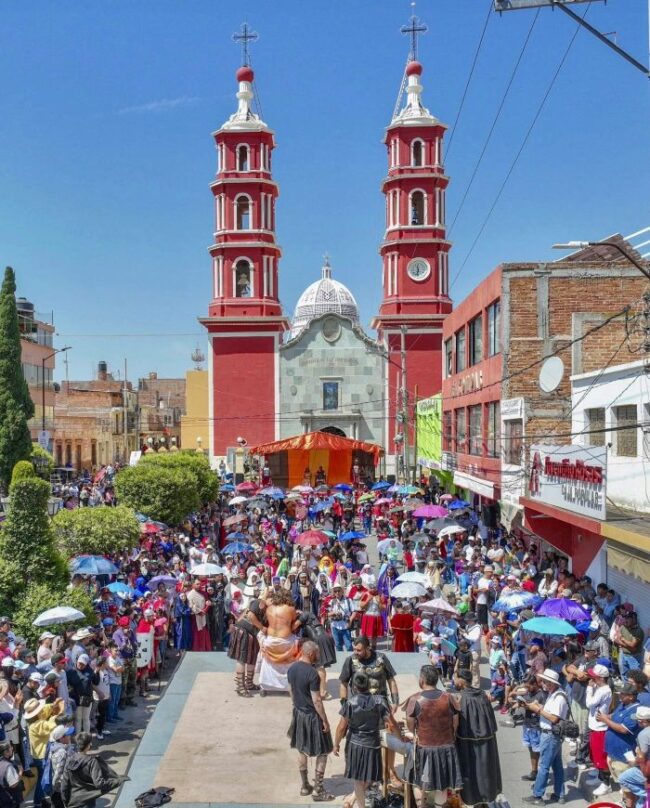
These celebrations not only reflect faith, but also the cultural richness of Guanajuato. Municipalities such as Salvatierra, Yuriria, Moroleon, and Uriangato join in with religious and community activities that strengthen local identity and enrich the State’s tourism offer.
In addition to religious celebrations, Guanajuato offers spaces for spiritual and cultural connection such as its archaeological zones: Plazuelas, Peralta, Canada de la Virgen, El Coporo and Arroyo Seco, places that invite reflection in natural environments full of history.
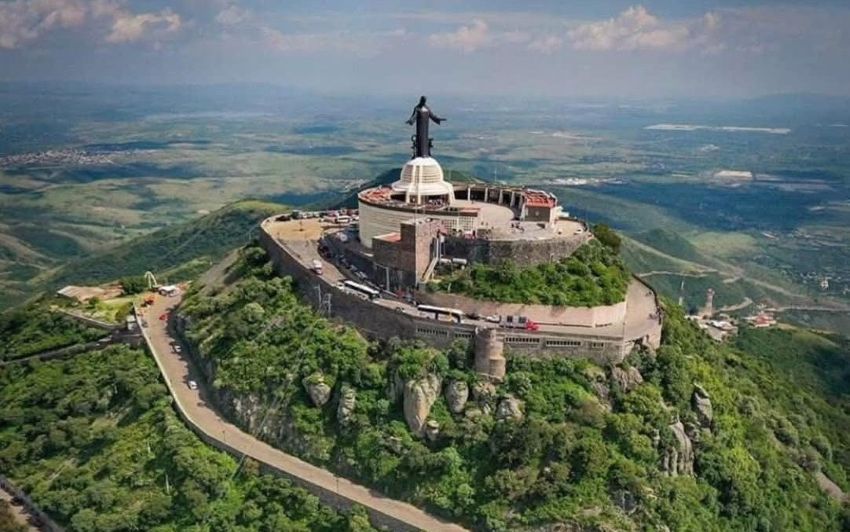
Religious tourism in Guanajuato also includes important sites such as the Sanctuary of Christ the King on Cerro del Cubilete, one of the main pilgrimage points in the country.
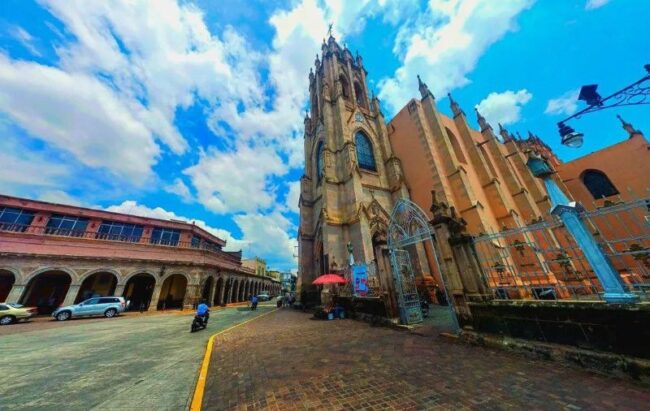
Key destinations like Guanajuato City, Leon, and San Miguel de Allende will be the hub of activity, with high occupancy rates and a wide range of cultural and religious experiences. Likewise, Pueblos Magicos (Magic Towns) such as Jalpa de Canovas and Yuriria will offer alternatives for those seeking to experience these holidays in more traditional settings.
Events such as the Burning of Judas in Leon, with more than 100 years of history, or the reenactments of the Stations of the Cross in various municipalities, complement an agenda that covers the entire state, consolidating Guanajuato as a complete destination during this season.
The Secretary of Tourism and Identity reaffirms its commitment to promote tourism as an engine of economic and social development, working hand in hand with municipalities, communities and service providers to offer safe, authentic and high-quality experiences.
En Español:


COMMENTS