
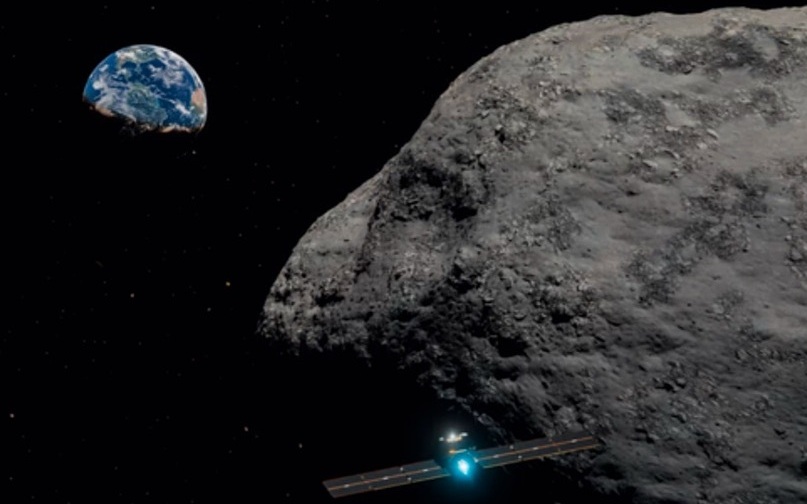
AstroForge plans to make spaceflight history next year. The California-based asteroid-mining company has booked its Autonomy-1 mission on the firs
AstroForge plans to make spaceflight history next year.
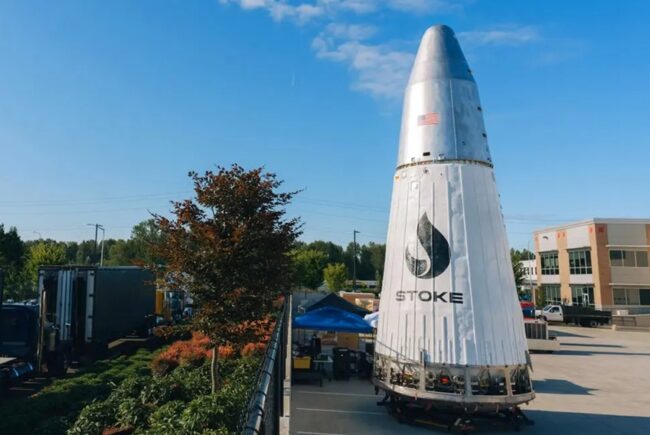
The California-based asteroid-mining company has booked its Autonomy-1 mission on the first-ever flight of Stoke Space’s Nova Pathfinder rocket, which is scheduled to launch in early 2027. As its name suggests, Autonomy-1 will operate independently, thanks to AstroForge’s newly developed Solo spacecraft intelligence model.

“Autonomy-1 will be the first space mission to complete its entire mission after separation without a single command from the ground,” AstroForge CEO and co-founder Matt Gialich wrote in a blog post announcing the mission. “Using Solo, we will remove the human operator from the loop,” reported Space.com.
AstroForge was founded in January 2022 with an ambitious goal in mind, which the blog post states: “to unlock the resources of the solar system.”
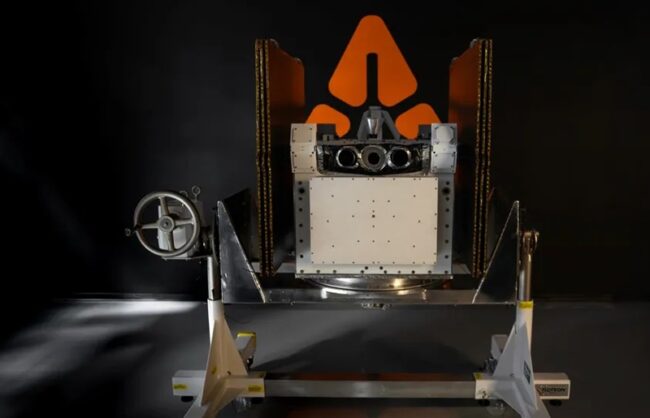
AstroForge will go after metals, which it plans to extract using a fleet of spacecraft spread throughout the final frontier. Manually controlling a large number of such probes would be a taxing and expensive enterprise, which explains why the startup developed Solo.
The intelligence model is “designed to autonomously coordinate a spacecraft’s onboard functions,” Gialich wrote in the blog post. “Solo works on top of AstroForge’s existing deterministic, physics-based flight software, allowing the spacecraft to make decisions in real time during flight,” reported Space.com.
Achieving full mission autonomy is the “holy grail of spacecraft engineering,” he added. And AstroForge will tackle it in a stepwise fashion.
Solo will first fly on the DeepSpace-2 mission, which will launch on the same SpaceX Falcon 9 rocket slated to send Intuitive Machines’ third robotic lunar lander toward the moon later this year, reported Space.com.
DeepSpace-2 aims to rendezvous with a near-Earth asteroid, but Solo won’t coordinate any of those operations. Rather, the intelligence model will act in “shadow mode,” meaning it will process spacecraft data and make decisions, but those decisions will not be implemented.
Things will change on Autonomy-1, which will be a full-scale demonstration of Solo in Earth orbit, reported Space.com.
“The mission objective is deliberately straightforward: after Autonomy-1 separates from its launch vehicle, we do not intend to send the spacecraft a single command,” Gialich wrote.
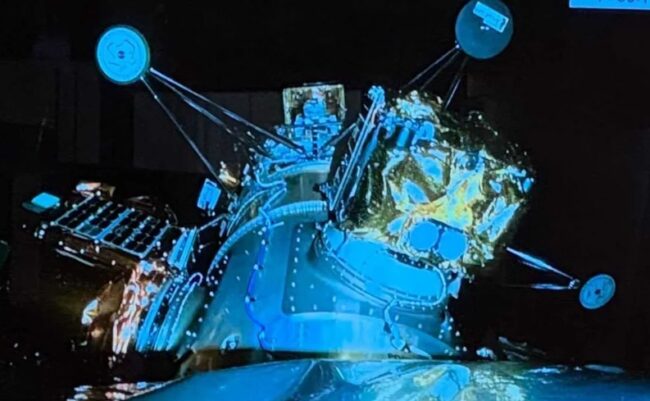
“Autonomy-1 will transmit telemetry and science data back to Earth so that we can observe what the spacecraft is doing, understand the decisions Solo makes and collect science,” he added. “But that information will only flow one way, from the spacecraft to the ground,” reported Space.com.
Solo will also have to support the activities of a scientific payload, those of COMPASS (Compact Multi-Spectral Photometer for Space Science), a NASA heliophysics instrument that’s flying on the mission.
AstroForge already has two space missions under its belt. The company sent a prototype cubesat called Brokkr-1 to Earth orbit in April 2023, but was unable to activate its refinery tech, reported Space.com.
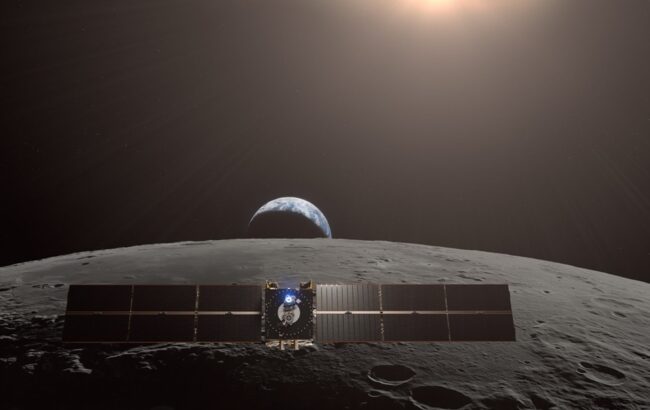
Then, in February 2025, AstroForge’s Odin spacecraft launched to deep space along with Intuitive Machine’s IM-2 moon-landing mission. Odin was supposed to fly by and study a near-Earth asteroid, but AstroForge had trouble establishing communications with the spacecraft, which ended up being lost.
Autonomy-1’s launch will be closely watched, and not just by people who care about asteroid mining. It will be the first-ever orbital launch for Stoke Space, a company developing fully reusable rockets tech that experts say could revolutionize spaceflight. One such believer is SpaceX, which is developing a fully reusable vehicle of its own, the Starship megarocket, as reported by Space.com.
All Credit To: Space.com


COMMENTS