
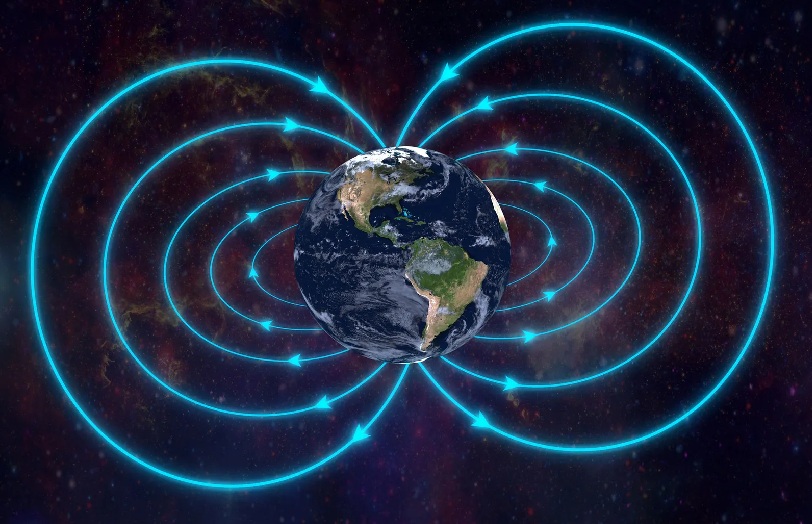
Life on Earth has never existed without the shelter of the planet's magnetic field, and according to new research, that constant presence may be quie
Life on Earth has never existed without the shelter of the planet’s magnetic field, and according to new research, that constant presence may be quietly woven into the basic biology of living organisms, with possible implications for aging and future treatments for diseases like Parkinson’s and Alzheimer’s.
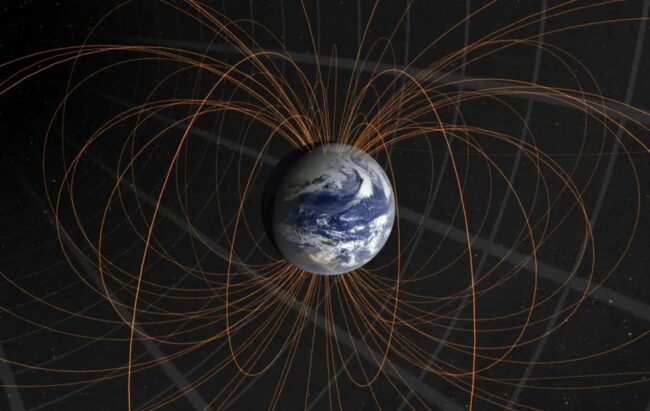
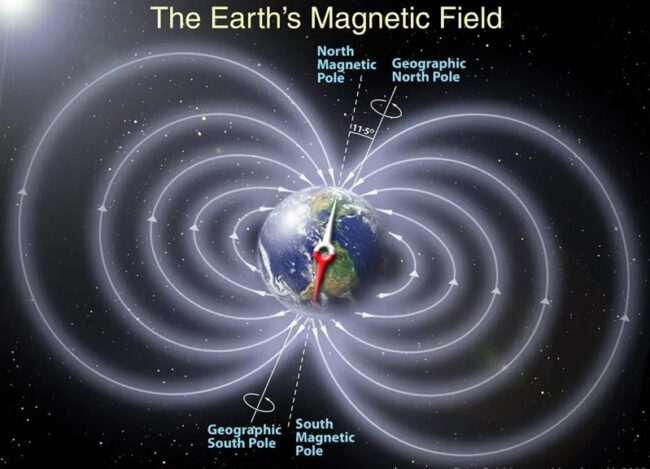
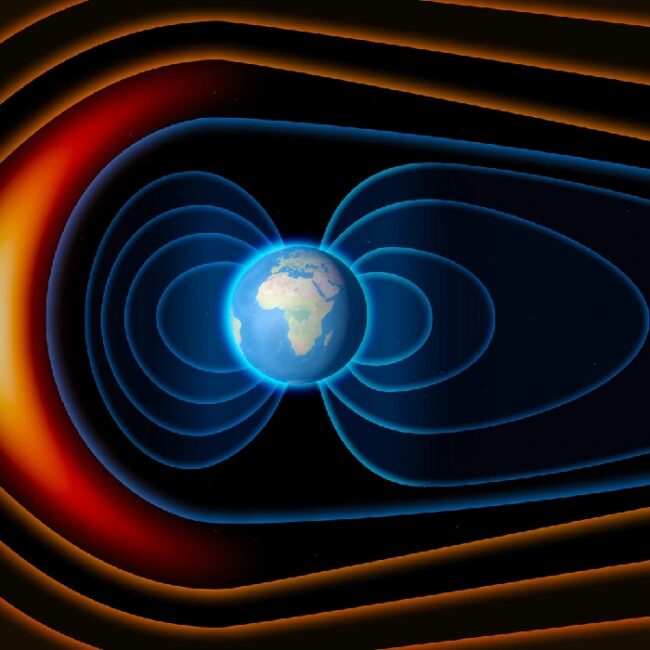
Generated deep within Earth’s core for at least 3.7 billion years and extending far out into space, this invisible cocoon is popularly credited with helping preserve Earth‘s habitability, shielding the planet from harsh solar winds and helping retain the water that makes life possible. Scientists have also long known that migratory birds and animals such as sea turtles can sense this field and use it to navigate. However, its more fundamental influence on biology has remained poorly understood, researchers say.

“We live our entire lives within the Earth’s magnetic field,” Lisa Chakrabarti, a professor at University of Nottingham’s School of Veterinary Medicine and Science, said in a statement. “It passes through our bodies, our cells and every living organism on the planet, yet we know surprisingly little about whether and how this invisible force affects the way our cells work.”
To get some answers, the research team, co-led by Chakrabarti, tried switching it off. Using a special magnetic shielding system, the researchers reduced the ambient field to near zero and compared two groups of fruit flies, healthy flies and flies with a defect in Pink1, a gene associated with inherited early onset Parkinson’s disease in humans. Starting from the moment each fly reached adulthood, the researchers tracked both groups for 70 days, scoring them alive or dead each day, the team reports in a new paper.
The researchers found shielding the diseased Pink1 flies from Earth’s magnetic field increased their lifespan by around 20%. However, the environment also reduced their physical performance, which the team measured by placing the flies at the bottom of a small vial and timing how well they climbed. Meanwhile, the group of healthy flies showed the opposite pattern, with shorter lifespans but improved physical performance under the same conditions, according to the study.
“I was really confused at first,” study co-lead Jacob Reed, a Ph.D. student in bioscience at the University of Nottingham, told the independent news website 404 Media. “I was thinking: ‘Why are these Parkinson’s flies living longer than some of the wild-type flies?’ I had to double-check all of my data.”
The researchers link the source of these effects lies in the mitochondria, the structures inside cells that generate energy, specifically to part of the mitochondria’s energy-producing machinery known as Complex II.
Shielded healthy flies showed a significant rise in Complex II activity alongside elevated levels of a reactive molecule called superoxide, which is a byproduct of energy production that in high amounts can damage cells over time and a likely explanation for their shortened lifespan. In the Pink1 mutant flies, that same rise in Complex II activity appeared to compensate for their underlying genetic deficit, producing a “beneficial, life-extending response” effect instead, the study notes.
The findings raise the possibility that such non-invasive hypomagnetic conditions could eventually offer a therapeutic benefit for diseases like Parkinson’s and Alzheimer’s, the study notes.
“Understanding how cells sense and respond to magnetic fields could ultimately reveal new ways of manipulating mitochondrial function in aging and disease,” Chakrabarti said in the statement.
The findings also build on a scattered but suggestive body of prior research. For instance, earlier human studies have linked reduced magnetic field exposure to slightly worse performance on problem-solving tasks and small changes in pupil size. Meanwhile, studies in rats examining magnetic fields and bone density have produced inconsistent results, with some finding weaker bones and others finding no effect at all.
Taken together, the research is messy and sometimes contradictory, but one pattern keeps emerging, the study notes, that magnetic fields “can affect fundamental cellular processes” and that responses differ “depending on the cell type.”
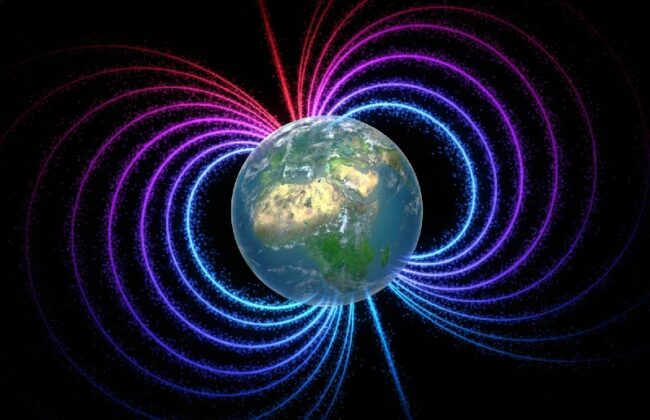
The new work may also carry implications beyond Earth, the researchers say. As space agencies look toward longer missions to the moon and Mars, astronauts will spend extended stretches beyond the reach of Earth’s magnetic field. Scientists already know that this exposes them to harmful cosmic radiation, but how the absence of the field itself, separate from radiation, might affect human physiology is not very well understood.
“The link with interplanetary space travel is absolutely key,” Chakrabarti told 404 Media. “Unless we know what those parameters are to measure, we’re going to be sending astronauts up there that are potentially going to really suffer over the short, or even for the longer, term.”
All Credit To: Space.com


COMMENTS