
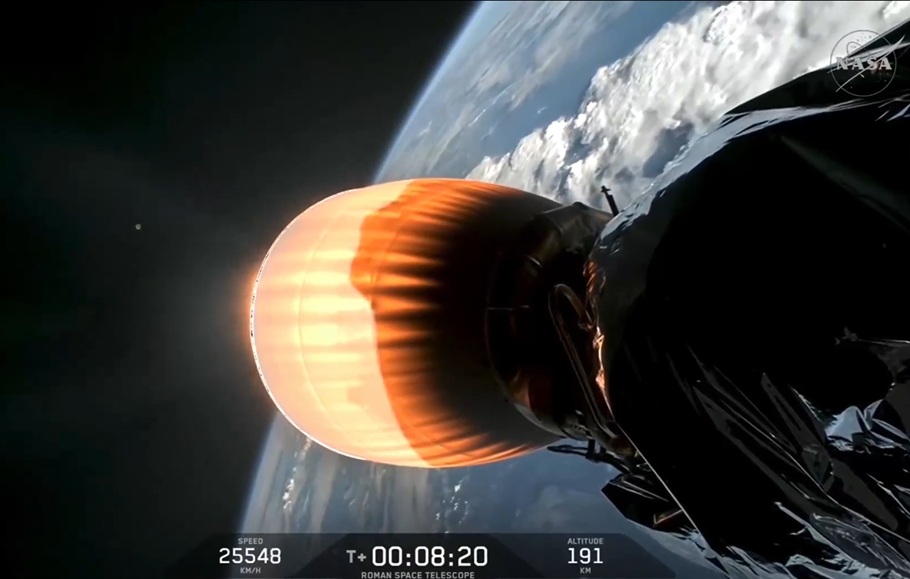
A new era of astronomy is about to begin after NASA's newest flagship observatory leaped from the terrestrial bounds of Earth into the vastness of sp
A new era of astronomy is about to begin after NASA’s newest flagship observatory leaped from the terrestrial bounds of Earth into the vastness of space this morning.
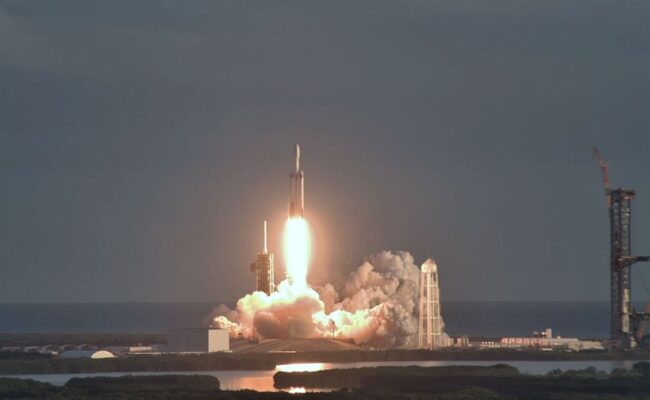
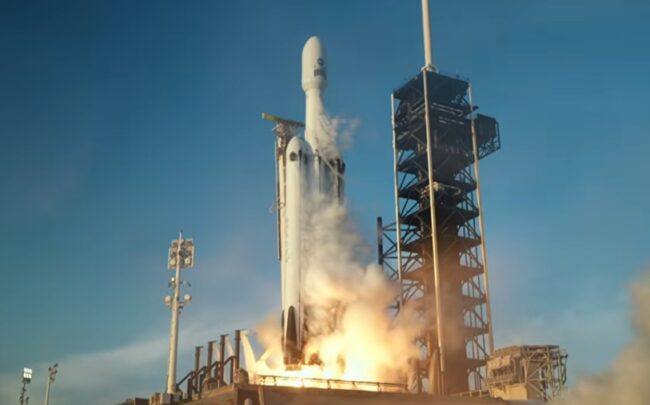
NASA’s Nancy Grace Roman Space Telescope launched today (Aug. 30) on a SpaceX Falcon Heavy rocket from the Kennedy Space Center here in Florida. Liftoff occurred at 7:26 a.m. EDT (1126 GMT) at Launch Complex-39A (LC-39A).

Roman is NASA’s newest orbital observatory designed to add to the wealth of research and discoveries we’ve received from the Hubble Space Telescope and James Webb Space Telescope, reported Space.com.
“The scope is extraordinary,” Roman senior scientist Julie McEnery said during live commentary. “We will do a survey of our own Milky Way galaxy and find 20 billion stars. That would make it the largest catalog of astronomical objects that’s ever been produced.”
While Hubble and the JWST are built to get close looks at distant phenomena in the universe, Roman will study the bigger picture of our cosmos, reported Space.com.
Roman´s main instrument, known as the Wide Field Instrument (WFI), will take extremely wide images of the universe, capturing ultra-high definition views across broad swaths of the sky. It’s also equipped with the first active coronagraph to be used in space, which will revolutionize exoplanet studies.
The Roman Space Telescope is named after NASA’s first chief astronomer Nancy Grace Roman, the first woman in an executive leadership role at the space agency. It was Roman who advocated for a telescope in space, leading to the Hubble Space Telescope. Roman, who died in 2018, earned the nickname “Mother of Hubble” as a result, reported Space.com.
“It was Nancy in the old days, before the internet and before Google and email and all that stuff, who really helped to sell the Hubble Space Telescope, organize the astronomers, who eventually convinced Congress to fund it,” Ed Weiler, Roman’s successor as Hubble’s chief scientist, told the Voice of America in 2011.
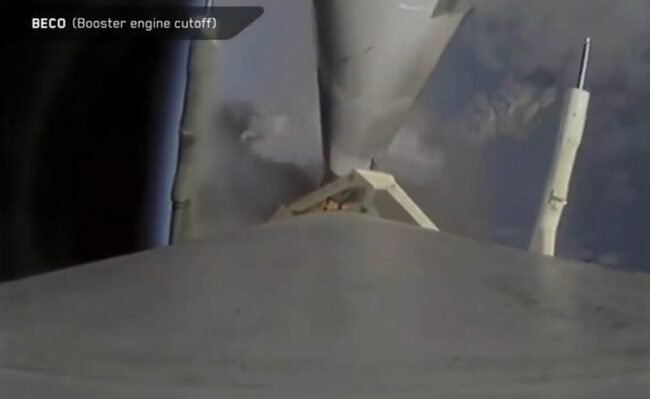
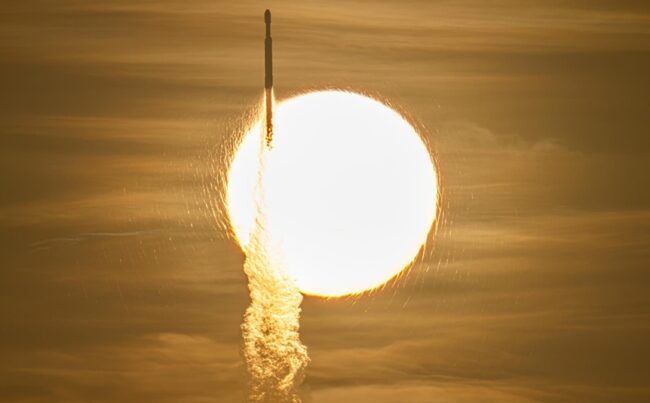
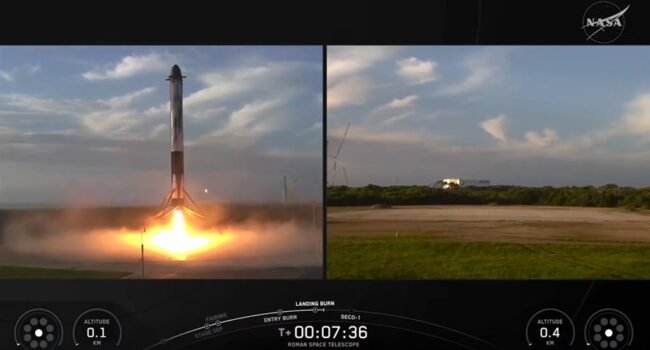
At liftoff, Falcon Heavy blazed off the pad at LC-39A, roaring with the thunder of 21 Merlin 1D engines on the business end of the SpaceX triple-booster launch vehicle. About 2.5 minutes into flight, the rocket’s two side boosters cut off their engines for a nominal separation and began trajectory burns to return for a landing back here on the Space Coast, reported Space.com.
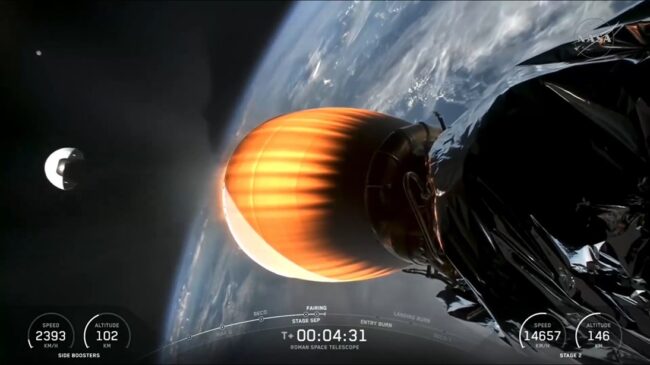
The rocket’s core booster then continued onward to deliver Falcon Heavy’s second stage equipped with Roman into space. Main engine cut off (MECO) and separation of Falcon Heavy’s main stage took place about four minutes after liftoff, with fairing separation about 15 seconds later.
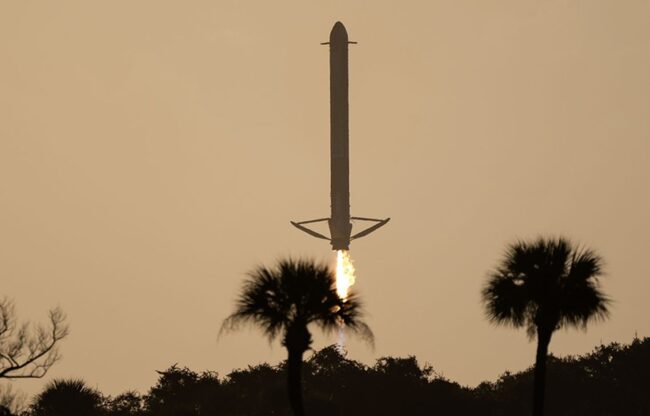
Falcon Heavy’s side boosters, meanwhile, executed boostback burns for landings at SpaceX’s Launch Complex-40 and Landing Zone-2 at Cape Canaveral Space Force Base, a few miles downrange from LC-39A, reported Space.com.
Roman’s delivery to space caps more than a decade and $4 billion of development for the space telescope, which was made possible, in part, by incorporating elements of an unused spy satellite.
With its coronagraph and WFI, the telescope is designed to make groundbreaking strides in the fields of dark matter and dark energy, exoplanet discoveries, and will be capable of capturing views 100 times wider than those of its Hubble predecessor, reported Space.com.
“The smallest Roman images will be a billion pixels,” Dominic Benford, progam scientist for the Roman Space Telescope, said during live commentary. “When we take a billion-pixel image, there isn’t a screen on Earth large enough to display all the pixels.”
The coronagraph works by blocking out the light of distant stars in such a way that scientists can examine minute details around those stars, meaning they can map out exoplanets orbiting in the systems. Once active, Roman’s Wide Field Instrument (WFI) will capture more than a terabyte of data daily; its largest survey will take over a year to complete and is expected to fill more than half a million 4K TVs, reported Space.com.
How big will the largest Roman image be?
“A trillion pixels,” Benford said.
You can actually adopt one of those Roman Space Telescope pixels yourself with NASA’s new “Adopt a Pixel” program, which the agency announced during the Roman launch.
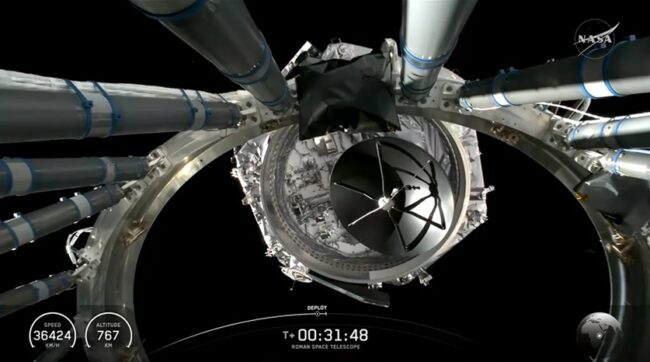
Roman’s Falcon Heavy launch vehicle released the telescope to fly on its own a short 31 minutes after liftoff. NASA cheered the success, and even got a bit of a nod from celebrities in the form of a recorded message from singer Jewel, reported Space.com.
“As you may know, I make artwork using astrophysical data, and there would be no data more fascinating than dark energy and dark matter,” Jewel said in a recorded video. “And so, it is with this great wish of great success and Godspeed that I wish the Nancy Grace Roman Space Telescope so excited”.
Now, the telescope is headed to sun-Earth Lagrange point 2 (L2), a relatively stationary orbital location beyond the orbit of the moon that allows the spacecraft to remain persistently on Earth’s night side, with the sun on the opposite side of the planet. The locale places the sun to Roman’s backside and points its sensitive instruments away from the intrusion of light reflected off the Earth and moon.
Roman’s journey to L2 will take about 90 days. The first 40 or so of those days will be spent turning on the telescope’s instruments and performing status checks as the spacecraft slowly configures itself for operation. Science commissioning will begin after about 45 days, its completion corresponding with when Roman arrives at L2, reported Space.com.
“I very much hope, and in fact, expect that the most exciting science of Roman will be a surprise, something we couldn’t predict and that will set the stage for the next, deeper set of questions for future missions to progress,” McEnery told reporters a day before launch.
The telescope’s first images are expected in the beginning months of 2027, as reported by Space.com.
All Credit To: Space.com


COMMENTS