
For researchers seeking answers to the question of whether we are alone in the universe, one event nearly half a century ago lingers even today, the
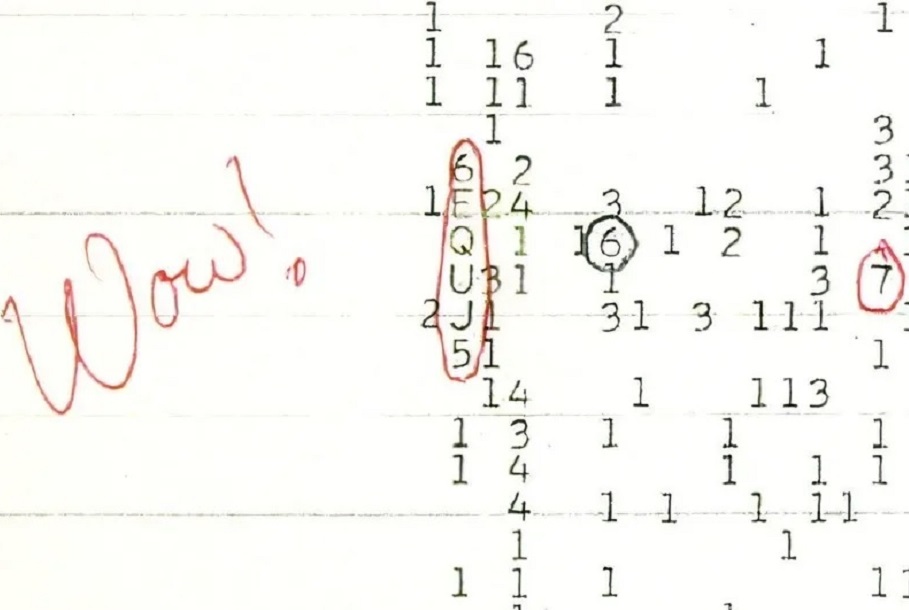
For researchers seeking answers to the question of whether we are alone in the universe, one event nearly half a century ago lingers even today, the so-called “Wow! Signal” detected back in 1977.
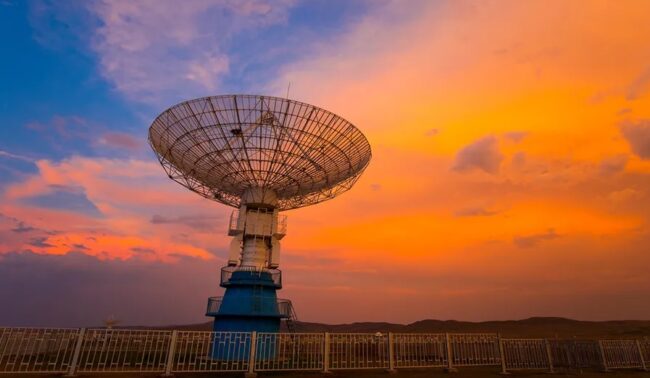
That strong, baffling radio episode was captured by Ohio State University’s Search for Extraterrestrial Intelligence (SETI) project, also known as the “Big Ear.” It has been viewed by some as one of the oddest radio transmissions from afar ever detected, also cited as compelling evidence for extraterrestrial intelligence, reported Space.com.

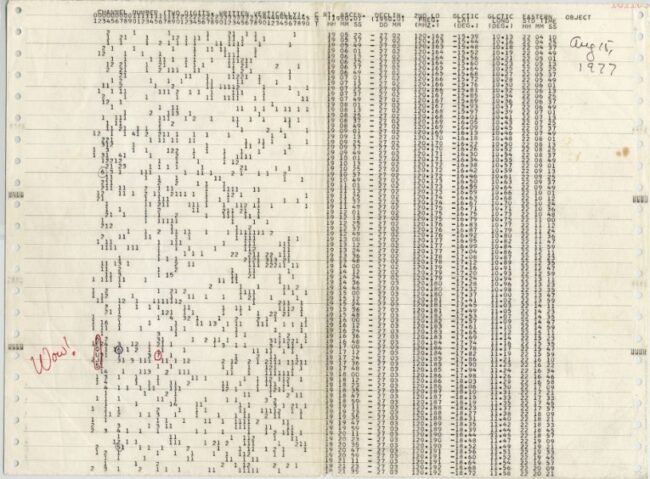
The outburst was a strong narrowband radio signal received on Aug. 15, 1977 by Ohio State University’s Big Ear radio telescope. Astronomer Jerry Ehman discovered the anomaly a few days later while reviewing the recorded data, writing on a computer printout “Wow!”
Jump ahead to today. Researchers from the Planetary Habitability Laboratory at the University of Puerto Rico at Arecibo are proposing a less extraterrestrial explanation. On-going assessments, led by Abel Mendez, are being pursued under the “Arecibo Wow!” Project, an initiative established to analyze unexplained radio signals from space in the search for extraterrestrial intelligence, reported Space.com.
“We look at old archives with modern science methodologies. It’s a bit like space archaeology,” said Wow! Signal researcher Hector Socas Navarro, director of the European Solar Telescope Foundation and a staff scientist at the Instituto de Astrofisica de Canarias.
New clues
Researchers from that project have re-analyzed decades of previously unpublished observations and archival data from the Ohio State University SETI program. The result is the most precise characterization yet of the perplexing signal from afar and revealing new clues to its origin, reported Space.com.
“Our newly derived properties may help finally pinpoint the source of the Wow! Signal,” Mendez told Space.com. While the group’s just-published paper focused on revising the known properties of the Wow! Signal, “we also discovered new properties that we look forward to sharing in an upcoming paper,” he advised.”We aim to archive and share all data from the Big Ear telescope by 2027, marking the 50th anniversary of the Wow! Signal,” Mendez added, reported Space.com.
Natural astrophysical origin?
In a recent posting on the Arecibo Wow! Project’s website, Mendez underscored the team’s output to date.
The research findings spotlight the prospect that the Wow! Signal was created by a natural astrophysical origin, Méndez and colleagues report. Also the work does make radio interference “an increasingly unlikely explanation,” they add, reported Space.com.
“This study doesn’t close the case,” Mendez points out. “It reopens it, but now with a much sharper map in hand.”
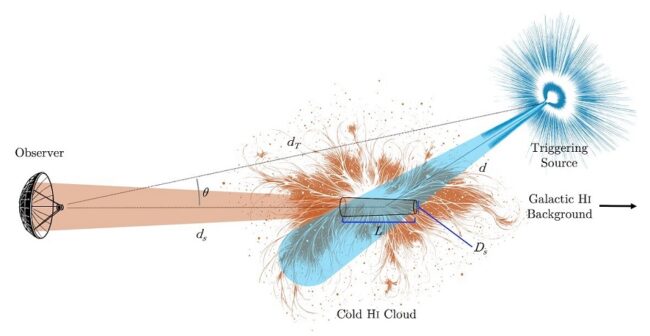
Mendez and fellow researchers hypothesize that the Wow! Signal was caused by a sudden brightening of the hydrogen line in interstellar clouds, triggered by a powerful transient radiation source such as a magnetar flare or soft gamma repeater (SGR).
“Our results don’t solve the mystery of the Wow! Signal,” Mendez states. “But they give us the clearest picture yet of what it was and where it came from. This new precision allows us to target future observations more effectively than ever before,” reported Space.com.
Citizen science, join the search
The continuing research into the Wow! Signal has spurred the creation of the Wow@Home project. This initiative is a low-cost way that others can now actively search for similar signals and other rare cosmic events, including potential technosignatures of other star folk, in real time.
Wow@Home project officials found that the Wow! Signal was strong enough that even small telescopes could potentially detect similar signals.
Indeed, a network of small radio telescopes offers several distinct advantages compared to large professional observatories, reported Space.com.
Low-cost systems can operate autonomously around the clock, “making them ideal for continuous monitoring of transient events or long-duration signals that professional telescopes cannot commit to observing full-time,” Mendez and colleagues suggest.
Wow-like signal strength
Wow@Home is a cost-effective, engaging, and accessible, ideal for education, citizen science, and expanding participation in radio astronomy, reported Space.com.
“A complete setup costs around $500, including a dedicated computer, but we are not selling these systems. Instead, we will provide recommendations for the necessary parts and offer free software to power the telescope and connect it to the Wow@Home network to search for transient events,” a Wow@Home posting explains.
The software is built on analysis methods the project’s developing to detect Wow-like signals in the archive data of professional observatories, as part of their Arecibo Wow! undertaking, as reported by Space.com.
For more information on Wow@Home, visit the project’s website. The group’s recent research report is available on arXiv.org and will be submitted to the Astrophysical Journal.
All Credit To: Space.com


COMMENTS