
A private company will give a powerful NASA space telescope a new lease on life next year, if all goes according to plan. Arizona-based Katalyst S
A private company will give a powerful NASA space telescope a new lease on life next year, if all goes according to plan.
Arizona-based Katalyst Space Technologies has scored a contract to raise the altitude of NASA’s Neil Gehrels Swift Observatory, which has been hunting for gamma-ray bursts (GRBs) from low Earth orbit (LEO) for more than two decades, reported Space.com.

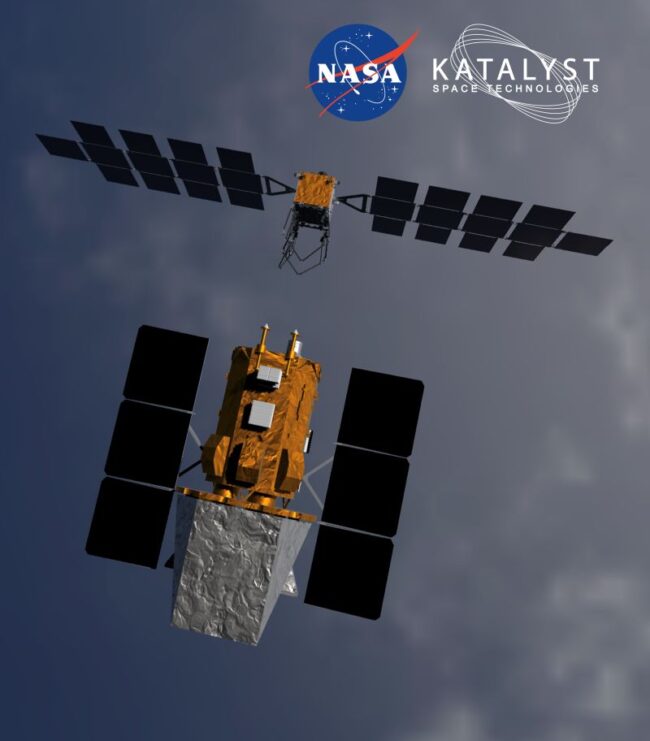
Sparse molecules in the wispy outer reaches of Earth’s atmosphere have been dragging Swift down over the years, and this process has ramped up recently thanks to increased solar activity (which causes the atmosphere to expand). So NASA tapped Katalyst to build a boosting spacecraft to remedy the situation. It’s expected to launch toward Swift in the spring of 2026, rendezvous with the observatory, and raise its altitude, reported Space.com.
Success would be historic: No private spacecraft has ever captured a U.S. government satellite that’s uncrewed, or that wasn’t designed to be serviced in the final frontier, according to NASA.

“Given how quickly Swift’s orbit is decaying, we are in a race against the clock, but by leveraging commercial technologies that are already in development, we are meeting this challenge head-on,” Shawn Domagal-Goldman, acting director of the Astrophysics Division at NASA Headquarters in Washington, D.C. said in a Sept. 24 statement that announced the new plan, reported Space.com.
“This is a forward-leaning, risk-tolerant approach for NASA,” he added. “But attempting an orbit boost is both more affordable than replacing Swift’s capabilities with a new mission, and beneficial to the nation, expanding the use of satellite servicing to a new and broader class of spacecraft.”
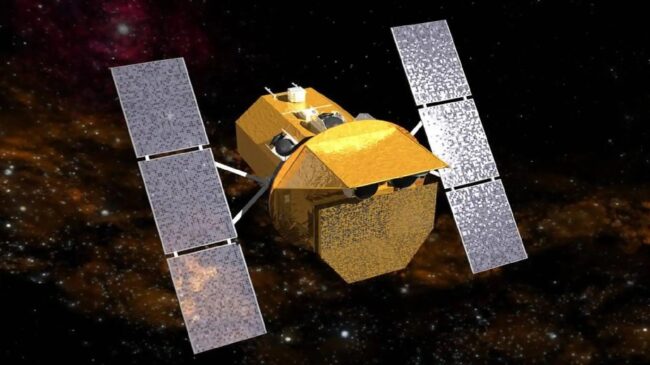
Swift launched to LEO in 2004. It detects GRBs, which are intense blasts of radiation that result from some of the most energetic events in the universe, the deaths of massive stars, for example, or mergers between two black holes, reported Space.com.
“When a rapid, sudden event takes place in the cosmos, Swift serves as a ‘dispatcher,’ providing critical information that allows other ‘first responder’ missions to follow up to learn more about how the universe works,” NASA officials said in the same statement.
“For more than two decades, Swift has led NASA’s missions in providing new insights on these events, together broadening our understanding of everything from exploding stars, stellar flares, and eruptions in active galaxies, to comets and asteroids in our own solar system and high-energy lightning events on Earth,” they added.
Katalyst got $30 million to build the new spacecraft via NASA’s Small Business Innovation Research (SBIR) program. The company was already an SBIR participant, which helped enable the accelerated timeline that NASA and Katalyst are targeting with the Swift boost, agency officials said, reported Space.com.
And there may be more deals like this one coming down the road, they added.

“America’s space economy is brimming with cutting-edge solutions, and opportunities like this allow NASA to tap into them for real-world challenges,” said Clayton Turner, associate administrator for the agency’s Space Technology Mission Directorate. “Orbital decay is a common, natural occurrence for satellites, and this collaboration may open the door to extending the life of more spacecraft in the future,” as reported by Space.com.
All Credit To: Space.com


COMMENTS