
Though we think of rings as being decorative elements of a planet, they are active, dynamic structures. For centuries Saturn was famous as our sol
Though we think of rings as being decorative elements of a planet, they are active, dynamic structures.
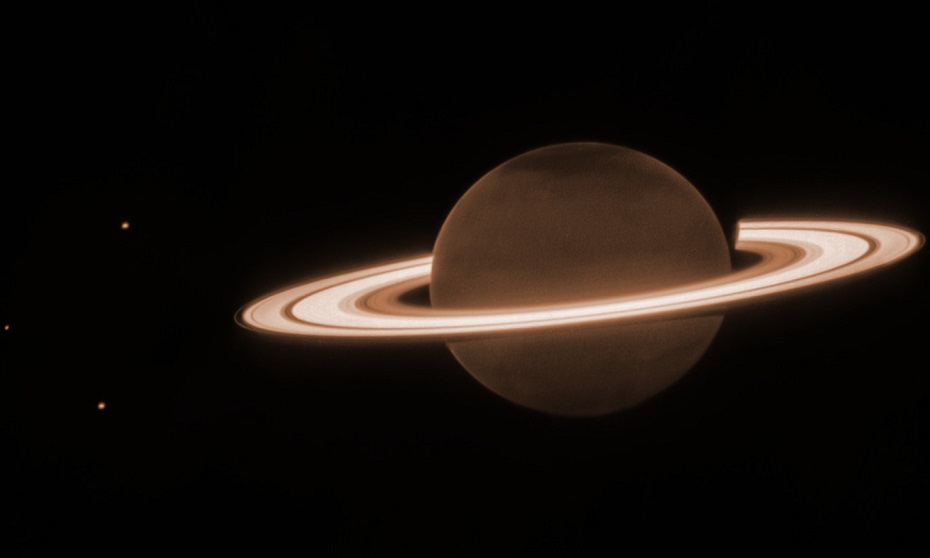
For centuries Saturn was famous as our solar system’s only ringed planet, encircled by wide, sweeping structures of water ice. Today we know that all four of our solar system’s giant planets have rings, but only Saturn’s have been studied in-depth, reported NASA.

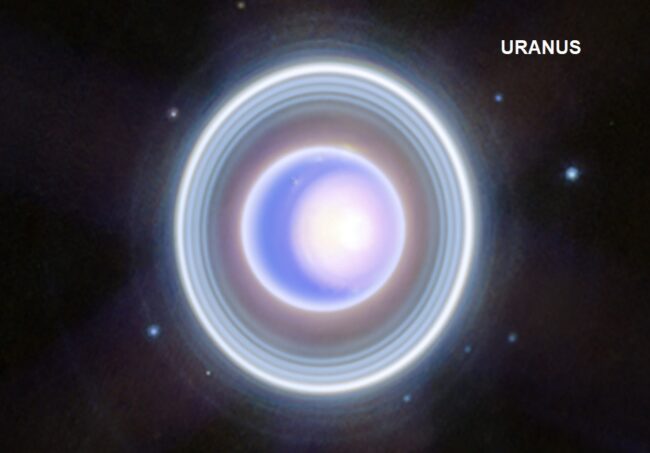
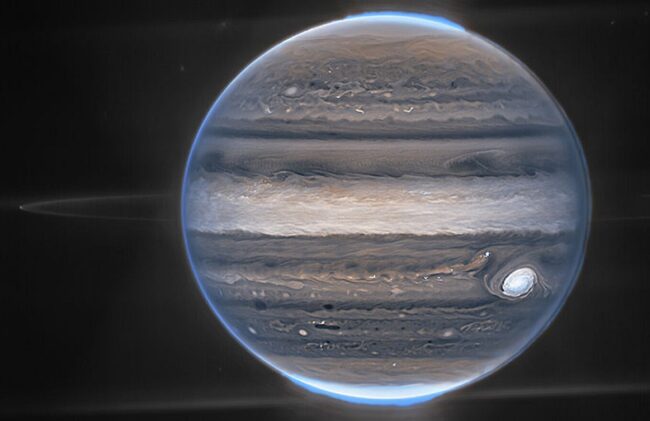
The James Webb Space Telescope’s infrared instruments are providing astronomers with their best look yet at the composition and motion of the outer planets’ rings. In Webb’s infrared-light views, the rings of Uranus and Neptune shine, and its observations show Jupiter’s giant storms, powerful winds, and auroras more clearly. Webb has also continued the study of Saturn’s rings.
Though we think of rings as being passive, decorative elements of a planet, they are more like an extraplanetary surface: They are active, dynamic structures that undergo daily temperature shifts, seasons, and even form moons. As Saturn and its rings travel around the Sun, the tilt of the rings causes seasonal changes, reported NASA.
The water-ice particles that make up Saturn’s rings range in size from specks smaller than household dust to boulders the size of houses. These ring particles stick to each other at different rates depending on how warm or cold they are, coalescing into small objects that then fall apart again when conditions change. At the conclusion of NASA’s 13-year Cassini mission at Saturn, the spacecraft only observed about half of the planet’s 28-Earth-year seasonal cycle. Combined, Cassini and Webb allow us to capture an entire Saturnian year.
Other Ring Worlds
Jupiter’s rings are made of very small dust particles, and their structure is dependent on Jupiter’s magnetic fields. Neptune has dark rings made of methane and ammonia ice. Uranus’ rings are dominated by chunky boulders and may consist primarily of rock, reported NASA.
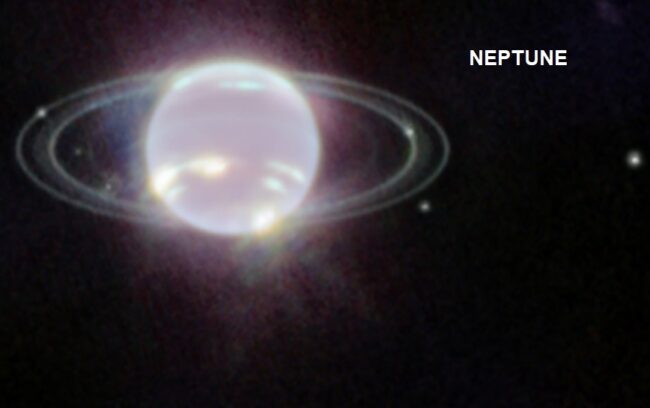
Webb’s latest observations help researchers pinpoint how the rings change around their planets, and look for small moons, new rings, and other material around the giant planets. Webb also watches as the planets move in front of stars to observe how the rings block starlight to determine whether the rings are dense or porous, and how their structures change over time. Most importantly, Webb is conducting spectroscopic observations of the rings, examining the light they emit for clues to their chemical composition.
Spectroscopy will also tell astronomers the age of the ice in the rings. These clues assist astronomers as they determine whether the rings’ origins are moons that broke up, or objects from the distant Kuiper Belt that were drawn to the planet by gravity and then torn apart. Gaps in our understanding of solar system evolution will soon be filled in, reported NASA.
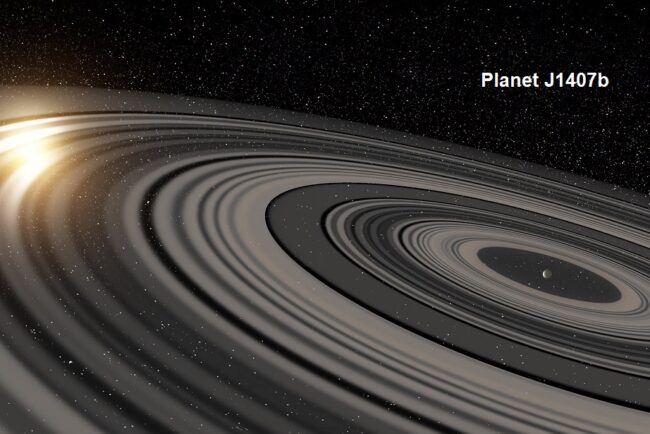
Finally, Webb is also looking at some puzzling features of rings that astronomers are still working to understand. The spoke-like structures that appear in Saturn’s rings and have been observed by Cassini and the Hubble Space Telescope. Around Neptune, intermittent regions of thickly clustered particles, known as ring arcs, have been seen to split and evolve, but astronomers need more data to truly understand the processes taking place.
Over time, Webb will provide a much clearer understanding of how the solar system works, and likely open up new areas of study we haven’t yet imagined, as reported by NASA.
All Credit To: webbtelescope.org /NASA /ESA /CSA


COMMENTS