
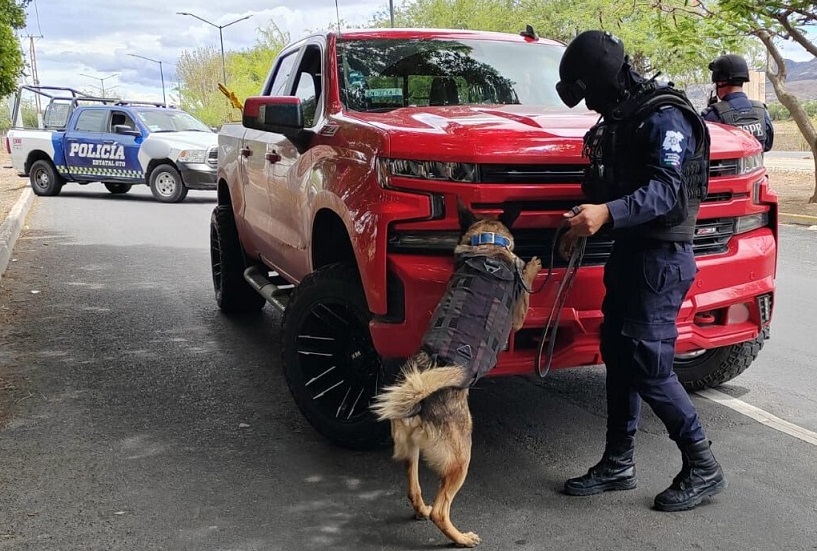
Each pair requires up to 18 months of training, with handlers certified in Mexico and the United States through the INL program; their work is part o
Each pair requires up to 18 months of training, with handlers certified in Mexico and the United States through the INL program; their work is part of the CONFIA security strategy
The unit of the FSPE has 32 canines trained to detect drugs, weapons, and currency; 20 operate in Leon and 12 more in Celaya
Guanajuato/Gto News
July 21 marked International Dog Day, a date promoted by animal rights organizations to highlight the bond between people and dogs and to promote their well-being.

In Guanajuato the date is an opportunity to recognize the dogs that work to protect citizens, patrol, detect risks, and help save lives. They are members of the K9 Canine Unit of the State Public Security Forces (FSPE).
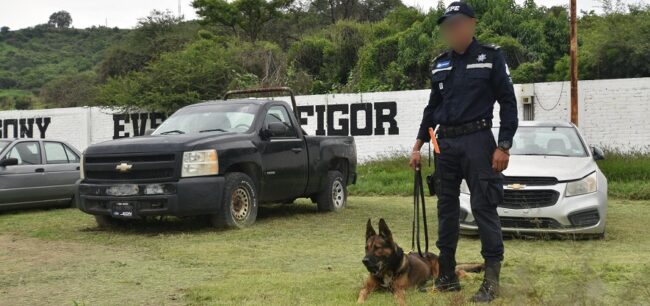
A canine team is more than just a trained dog and its handler:
- It’s discipline, technical training, and a connection built over time and trust
In the field, they work as one:
- Inspecting vehicles, inspecting packages, patrolling risk areas, and participating in operations where their sense of smell can do things that the naked eye sometimes can’t
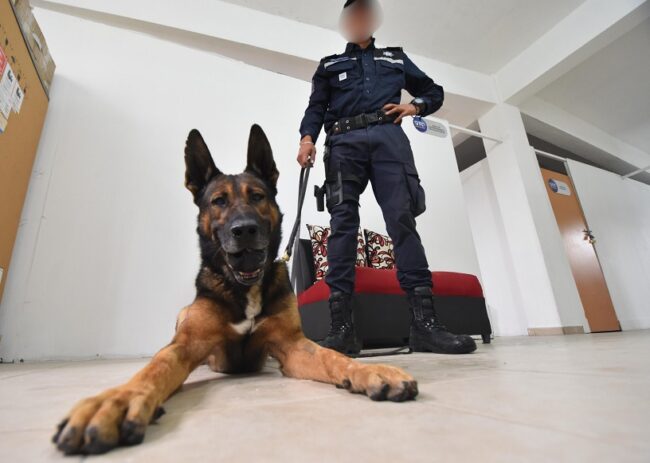
The FSPE K9 Unit is made up of 32 canine officers: 20 at the Leon base and 12 in Celaya. Most are Belgian Malinois, but there are also German Shepherds and a Dutch Shepherd.
They specialize in the detection of:
- Marijuana, crystal meth, cocaine, fentanyl, paper money, and firearms
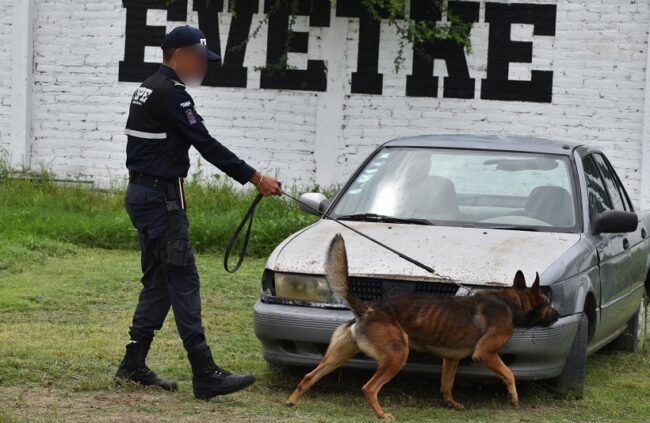
“A single pair can do the work of three or four police officers with their highly developed sense of smell,” explains Inspector Luis Rico Zavala, head of the unit. “We’ve had very good results, especially at delivery stores and temporary pretrial detention centers.”
Training each operational canine takes about a year, and handlers must go through a rigorous process. “Primarily, they must be certified internally by the Public Security Forces. Later, if we see that they meet the requirements, they are sent to the United States for certification,” explains the inspector.
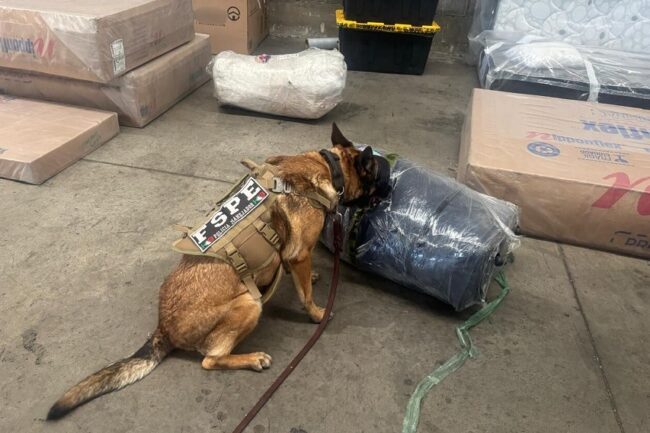
Thanks to the support of the State Department’s Bureau of International Narcotics and Law Enforcement Affairs (INL), some members have been trained in Florida, with the endorsement of the U.S. Embassy.
Operation also requires consistency: “Daily veterinary checkups, training, and mock operatives are performed in vehicles, parcel stores, or at homes,” explains Rico Zavala. When formal training isn’t available, the dogs go on stress-relieving walks or perform obstacle course exercises.
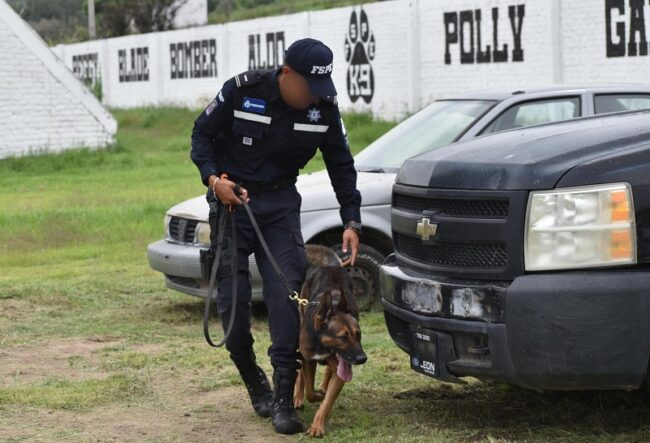
But technique isn’t everything. The bond between each handler and their dog is crucial. “It primarily requires that we like animals, that we like canine elements… it’s like a companion, it’s one of our own,” says Rico Zavala. Emotional affinity is also part of effectiveness and good results.
That connection remains even after the operational phase ends. When a dog retires after years of service, it’s often adopted by its own handler. “They can take it home and maintain the canine element for the rest of its life.”
There are also bonds that develop between the dogs themselves. Like the case of Figo, a Belgian Shepherd officer who donated blood to save a dog named Loki in Leon. “One day a dog was close to die, and Figo donated blood. The result was very good; the dog remained stable,” the inspector explains. “It’s truly an experience we’ve never had before, but we helped.”
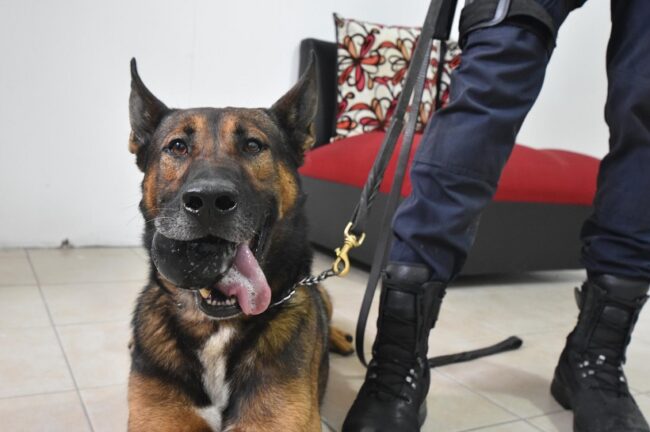
The People’s Government, through the Secretary of Security and Peace, recognizes the Canine Unit’s teams as an essential part of the Operational Coordination strategy of the New Anti-Crime Intelligence Force (CONFIA).
When you see one of these dogs during operations or at public events, ask before approaching. “It’s always recommended to ask, as we have dogs with slightly stronger temperaments,” warns the inspector.
If you have a dog at home, don’t forget that it’s also part of the Guanajuatense community. Caring for it, giving it affection, ensuring its well-being, and ensuring it doesn’t pose a risk to other people or animals is also part of building a safer environment.
En Español:


COMMENTS